How to Survive Your First 6 Months as a BJJ White Belt

Starting jiu jitsu feels a bit like trying to learn a new language while someone’s squashing you. Those first six months as a BJJ white belt? They’re confusing, physically tough, and, honestly, kind of humbling. You’ll tap out more times than you can count, and sometimes you’ll leave class thinking, “Wait, what just happened?”
The good news is, those early months are less about winning and more about showing up, building habits, and sticking with it. You don’t need to pull off flashy moves right away. Instead, focus on the basics, keep coming back, and let your body get used to this wild new sport.
Using a jiu jitsu training tracker can help you see progress, even when it feels invisible. If you log your sessions, you’ll notice which positions you’re working on, what’s giving you trouble, and how often you’re actually training. Let’s walk through what you can expect in your first six months and how to build a practice that’ll last longer than the beginner phase.
What the First Six Months Usually Feel Like
Most people find the first six months of training both confusing and exhausting. You’ll get tapped all the time, and your body will hurt in places you didn’t even know you had.
Getting Tapped Is Feedback, Not Failure
Getting tapped over and over in each class? That’s normal at the start. Every tap points out a gap in your defense or shows you where your position fell apart. If you’re a white belt, it helps to shift your mindset from “winning” to “learning.”
Many beginners get submitted repeatedly in a single rolling session, sometimes more times than they can easily track. Experienced training partners see openings you haven’t even noticed yet. They know techniques you haven’t learned. It’s just how it goes.
If someone taps you with the same choke three classes in a row, you’re getting clear info on what to work on. A tracker can help you spot these patterns without getting too caught up in the frustration. Just jot down what submission caught you and where it happened.
As a beginner, you’re building a mental library of situations. Each time you get caught in an armbar or triangle, you’re adding to that library. With enough reps, your body starts to recognize danger before your brain even finishes processing it.

What to Focus on Before You Chase Submissions
New students often want to start submitting everyone right away, but at first, it’s more important to build a strong defense and learn to spot bad positions.
Survival Positions to Recognize Early
You need to know when you’re in danger before you can escape. Side control, mount, back control, and knee on belly are the main spots where your opponent totally controls you.
In side control, your opponent lies across your chest. You can’t move much, and they have a lot of options to attack your neck or arms. Mount is when they sit on your torso with their knees on the ground, which gives them even more control and ways to submit you.
Back control happens when someone sits behind you and wraps their legs around your body. Back control is often one of the riskiest positions for beginners because your neck can be exposed. Knee on belly? That’s when their knee is pressing into your stomach or ribs and they can move around easily.
If you learn to spot these positions quickly, you’ll react faster. Once you know where you are, you can start working on survival skills. Guard retention gets easier when you notice the moment someone tries to pass. Your training tracker can help you see which bad spots you end up in most, so you know which escapes to practice during open mat.
Simple Habits That Make Training Sustainable
Building a consistent jiu jitsu practice really comes down to repeating small actions over time. One helpful way to stick with it is to notice the little improvements that pop up between belt promotions.
A sustainable rhythm matters too. In the first few months, many beginners do better when they leave class with enough energy to come back consistently instead of treating every round like a tournament match.
- Pick a class pace your body can recover from, then adjust as your conditioning improves.
- Ask trusted partners for controlled rounds when you want to work escapes or guard retention.
- Save all out rounds for moments when your coach or body gives you a clear green light.
Tracking Small Signals of Progress
Try not to get too hung up on big wins like submissions or medals. Real growth shows up in smaller ways. Keeping a training journal lets you spot changes that might slip by if you’re not paying attention.
After each class, write down a couple things. Maybe you escaped side control without freaking out, or you remembered to frame before someone passed your guard. These little signs tell you way more about your progress than any single tap.
Your progress tracker can help you notice how positions feel different as time goes on. Maybe closed guard made you panic three months ago, but now you can breathe and think about sweeps. Or maybe you’re asking more specific questions in class instead of just, “How do I get better?”
If you prefer a dedicated system, RollJourney can help you log sessions and spot patterns over weeks of training. You’ll see when certain techniques start to make sense or when tough positions get less scary. Writing things down gives you a second chance to process what you learned.
Write a bit about your mindset, too. Did you feel less anxious during sparring? Could you breathe normally when stuck on bottom? These shifts in how you feel matter just as much as the technical stuff.
Conclusion
Using a training tracker gives you a surprisingly clear way to notice your progress, even when it feels like you are just spinning your wheels. Especially for BJJ white belts, the next step can feel pretty foggy, but jotting down what you picked up in each class helps you catch those little improvements you might have missed.
Honestly, just showing up matters more than nailing every single move. A tracker nudges you to remember that consistency is a win on its own. Instead of stressing about mastering everything, focus on surviving and making small improvements. It might not feel like much at first, but when you flip back through your notes after a few weeks or months, you will probably spot growth you never noticed in the moment.
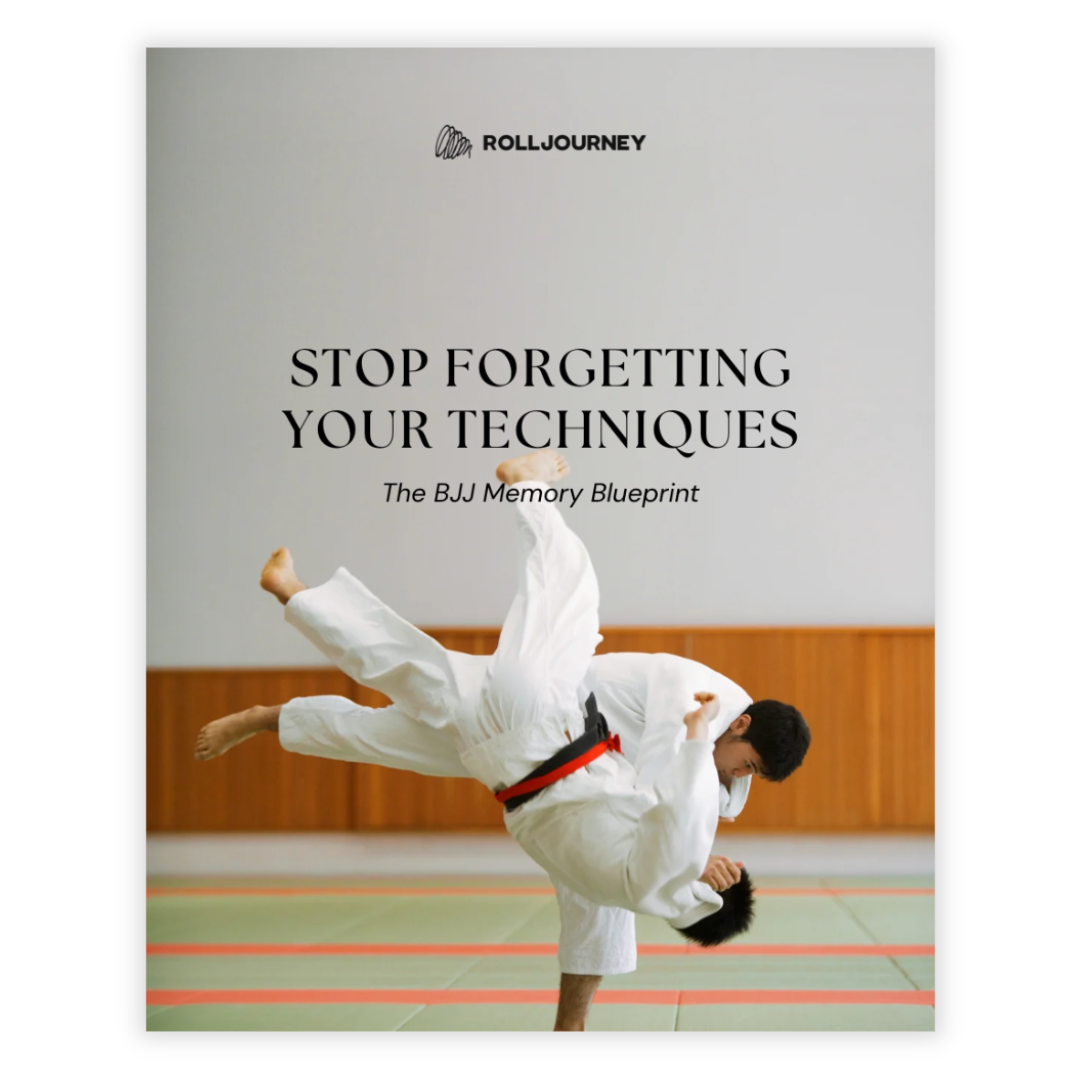
Stop Forgetting BJJ Techniques
Get the free 5‑day email course + bonus ebook. Learn the simple journaling system to remember every technique, spot patterns, and fix recurring problems.
Your email will remain private, you may unsubscribe at any time.