How to Get Better at BJJ: A Focused Training Feedback Loop

If you train jiu jitsu long enough, you may reach a period when progress feels less obvious. You keep showing up, drilling moves, rolling, and repeating the process the next week. The challenge may not be a lack of mat time. Consistent habits can help you make better use of your training.
Using a jiu jitsu training tracker can help you review your training. When you record what you worked on, what felt effective, and what fell apart, you may begin to see patterns. This feedback loop can help you identify what to revisit instead of simply collecting random techniques. The idea is not to memorize more moves. It is to create a system that helps you learn from each class.
In this article, we’ll look at how to organize your training around clear focus areas, use each class to gather feedback, and review what you learn so it actually sticks. These habits work whether you’re on the mat twice a week or almost every day.
Build Each Training Week Around One Clear Focus
Training gets more effective when you pick one thing to work on each week instead of trying to fix everything all at once. A jiu jitsu tracker keeps that focus right in front of you and helps you turn it into small, practical actions before every class.
Pick One Position Or Problem To Work On
At the start of the week, choose a specific position or problem that popped up during your last few rolls. Don’t go with something vague like “get better at passing.” Instead, pick something like “stop my opponent from framing on my hips while I try to pass half guard.”
Check your notes from last week. Which position gave you the most trouble? Where did you keep getting stuck? Go for the problem that happened a few times, not just a random submission you got caught in once.
Write this week’s focus at the top of your tracker. Keeping it visible can help. Review it before class and remind yourself what you are working on. That focus can guide your warmups and drills.
Before every class, turn your weekly focus into a simple intention for that session. If your focus is stopping half guard frames, your intention might be “use my bottom knee to create space before I try to pass.” Now you’ve got something concrete to try during sparring.
Your tracker can show this process. The weekly focus goes at the top. Under each day, add the intention you set before class. After training, record whether you practiced it and how it went.
This habit gets easier each week. Pick the focus at the start of the week. Set a daily intention before class. Note what happened after. The tracker just helps you keep the pattern going without much extra effort.
Positional goals work the same way. Want to improve your closed guard? Make that your weekly focus. Each day, pick one detail to zero in on. Maybe Monday is grip breaking, Wednesday is posture control, and Friday is working on transitions when your opponent stands up.

Turn Class, Drilling, And Rolling Into A Feedback Loop
Progress may become easier to assess when you connect what you practice to what breaks down during rolling. Drilling with a clear goal and recording brief notes after class creates a loop that can help you refine your technique over time instead of training without a plan.
Record What Worked And What Broke Down
Writing a few lines after training can turn scattered memories into useful information. You do not need to write a whole essay, just note what you focused on, whether it worked in rolling, and what fell apart.
Start with your focus for the day. Before drilling, pick one thing to work on. Maybe it’s keeping your elbows tight in closed guard or finishing a collar choke from mount. This becomes your testing point when you roll.
Drill it with purpose. Don’t just go through the motions. Think about the details as you repeat the move. Ask your partner to slowly ramp up resistance so you can feel where the technique holds up and where it doesn’t. You’re building a sense of what “right” feels like.
Test it during positional sparring or rolling. Try to use what you drilled. Sometimes it’ll work. Sometimes you’ll miss the setup or your partner will shut it down. Both outcomes teach you something.
Write your post class notes right after training. Pull out your phone and type three things: what you drilled, whether it worked during rolling (or what stopped you), and what you noticed about your execution.
These notes become your BJJ feedback loop. When you look back before your next class, you may spot patterns. Maybe your cross collar choke keeps failing because you are not controlling the far arm. That gives you a specific detail to revisit next time. This loop can help you choose what to practice rather than relying on improvement without a clear reason.
Your training tracker becomes a kind of map for your body and style. You stop wasting time on things that don’t fit and spend more energy refining what actually works for you in live rolling.
Study Less Randomly And Review More Consistently
If you focus your study time on what you really need, and then review it before class, you’ll remember more of the important stuff. This helps you get the most from your limited training time, both on and off the mat.
Revisit Your Notes Before The Next Session
Scrolling through random videos can feel productive, but a short, focused review may be more useful. Spend five or ten minutes before class looking at your notes or the progress from your last session. This habit can keep key details fresh when you return to the mat.
Your session journals remind you what gave you trouble last time. Maybe you got swept from a certain spot, or you couldn’t finish a submission you drilled. Reading these notes right before class helps you walk in with a clear plan instead of just hoping things go better.
Review any diagrams or position maps you made after previous classes. Visual reminders of grips, angles, and transitions may be easier to recall when you see them before drilling those same moves. The link between what you studied and what you practice can become more immediate.
If you watch instructional videos outside class, choose one that addresses a gap in your game. Watch it once, take a few notes about the important details, and review those notes before your next training session. That focused approach may be more useful than watching highlight reels that do not connect to your current focus.
Your training tracker can help you decide what’s worth reviewing. Look for patterns over several weeks. If the same positions or situations keep showing up in your notes, that’s where you should spend your study time.
The goal is not to cram or turn jiu jitsu into homework. Quick, purposeful reviews before class can remind you what to focus on when you roll. This can make your mat time more intentional without making training feel burdensome.
Conclusion
Keeping track of your BJJ progress can help you understand what to work on next. Reflecting on your training and recording what you practiced, what was difficult, and what made sense may reveal patterns over time. Apps like RollJourney can help you organize techniques and journal sessions. It is not only about training harder; it is about training with intention by reviewing what works and what still needs attention. Combining mat time with honest notes and regular check-ins can give your jiu jitsu practice a clearer focus over time.
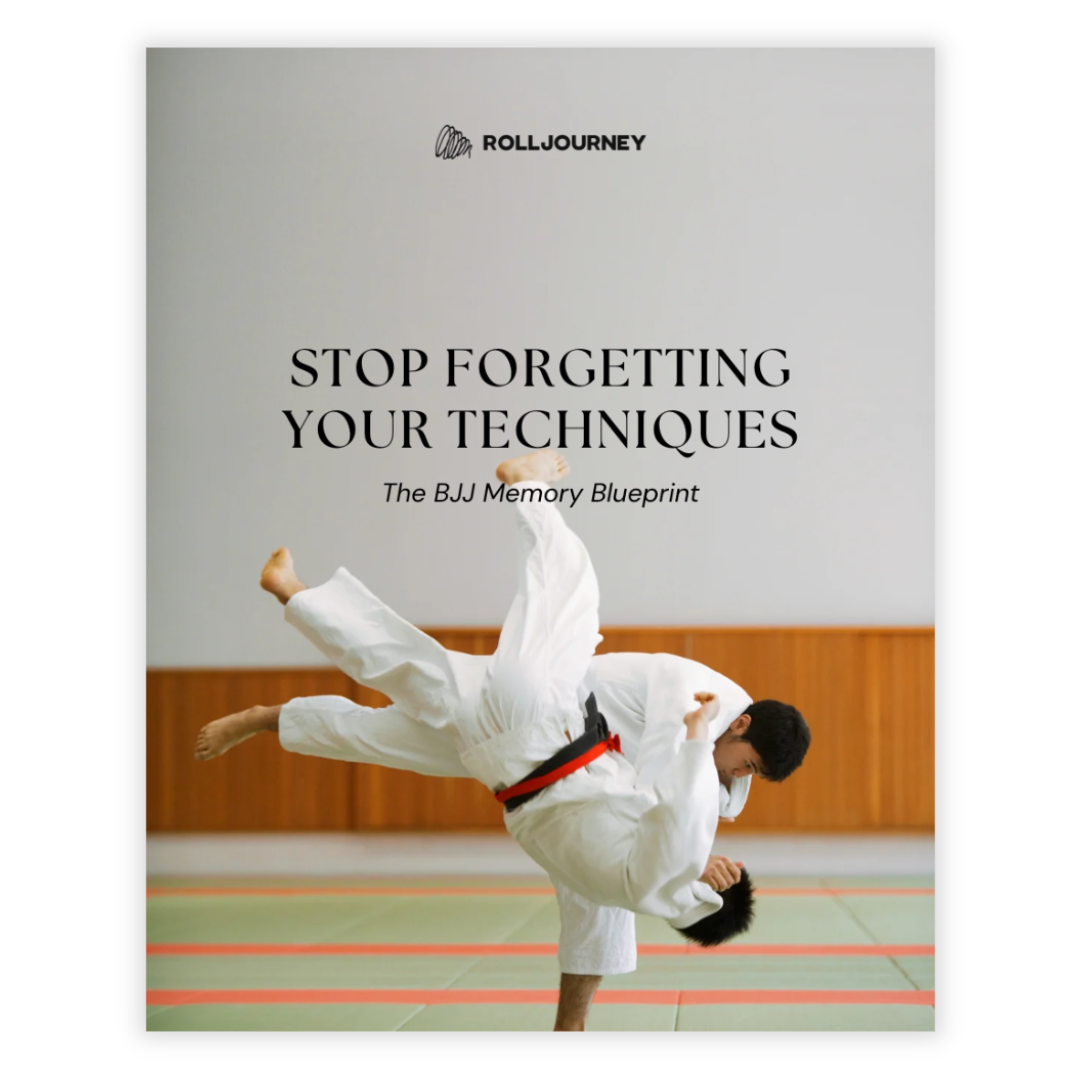
Stop Forgetting BJJ Techniques
Get the free 5‑day email course + bonus ebook. Learn the simple journaling system to remember every technique, spot patterns, and fix recurring problems.
Your email will remain private, you may unsubscribe at any time.